



A lower monthly payment can look like financial relief. It can also hide a longer repayment period, expensive fees, or the risk of losing an essential asset.
When I compare a secured vs unsecured debt consolidation loan for bad credit, I never begin with the advertised payment. I first calculate the complete cost. I then ask what happens if the borrower misses two payments after an income disruption.
That second question often reveals which option is truly safer.
The Core Difference Between Secured and Unsecured Loans
Debt consolidation replaces several balances with one new loan and one repayment schedule. It may simplify repayment and reduce interest, but those benefits are not guaranteed. The Consumer Financial Protection Bureau warns that a lower monthly payment may result from a longer term rather than a genuinely cheaper loan.
A secured consolidation loan requires collateral. Depending on the lender, that collateral could be home equity, a vehicle, a certificate of deposit, or money held in a savings account.
An unsecured loan does not give the lender a direct claim against a specified asset. Approval instead depends more heavily on income, existing debts, credit history, and the lender’s underwriting rules.
This makes the secured vs unsecured debt consolidation loan for bad credit decision a trade-off between borrowing cost and asset exposure.
Side-by-Side Debt Consolidation Loan Comparison
| Feature | Secured consolidation loan | Unsecured consolidation loan |
| Collateral | Required | Not required |
| Approval prospects | May improve when acceptable collateral reduces lender risk | Often more dependent on income and credit strength |
| Interest cost | May be lower | May be higher with damaged credit |
| Typical loan size | Can depend partly on collateral value | Usually depends on income and underwriting limits |
| Processing time | May take longer because of valuation and lien documents | May be faster when digital verification is available |
| Main default risk | Loss of the pledged asset | Collections, credit damage, and possible legal action |
| Best suited to | Stable borrowers with non-essential collateral and strong payment capacity | Borrowers who prioritize protecting physical assets |
The FTC specifically cautions that some consolidation loans use a home as collateral. Missing payments could therefore put the home at risk. Consolidation loans may also include interest, points, origination charges, and other costs.
How Secured Debt Consolidation Works With Poor Credit
Why Approval May Be Easier
Collateral gives the lender another potential recovery source if the borrower defaults. That added protection may improve approval prospects or support a lower rate.
A home equity loan, for example, allows a homeowner to borrow against home equity while using the property as collateral. The CFPB confirms that the home secures this type of borrowing.
Savings-secured and certificate-secured loans can create less disruption than borrowing against a home or primary vehicle. However, the pledged funds may remain restricted until the balance is repaid.
I would not assume that “secured” automatically means affordable. Some lenders add appraisal expenses, lien charges, origination fees, insurance costs, or account requirements. The CFPB advises borrowers to examine the loan disclosure because personal installment loans can carry several fees, including collateral-related charges.
The Real Cost of Pledging Collateral
The largest secured-loan risk is not the interest rate. It is the mismatch between the importance of the asset and the purpose of the loan.
Using a primary home to refinance credit card balances transforms unsecured consumer debt into debt backed by housing. The cards may disappear, but the financial consequences of default become more severe.
I therefore reject a secured loan when the pledged asset is essential for housing, employment, medical access, or family transportation. A cheaper rate does not compensate for an unacceptable default outcome.
That asset test should carry more weight than a lender’s optimistic marketing of a secured vs unsecured debt consolidation loan for bad credit.
How Unsecured Debt Consolidation Works With Bad Credit
Why Rates Can Be Higher
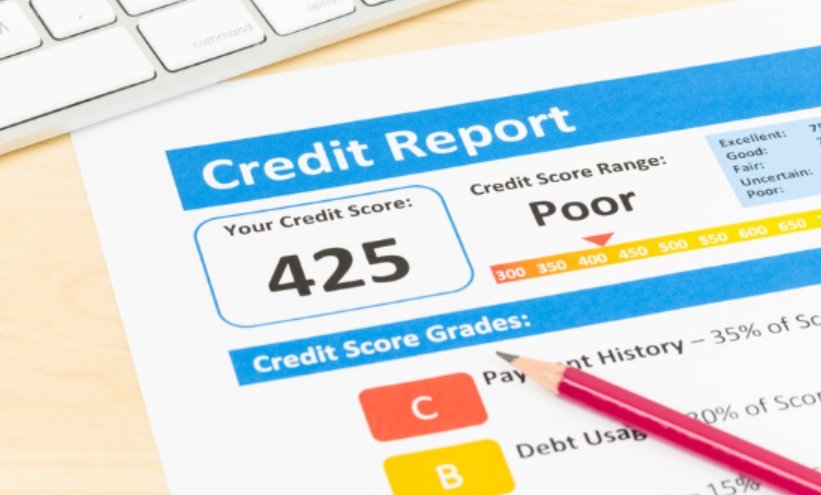
An unsecured personal loan does not place a direct lien on a house or vehicle. The lender accepts more risk, so applicants with weak credit may receive higher rates, lower limits, shorter terms, or a declined application.
Some offers can cost almost as much as the credit cards being consolidated. An origination fee may reduce the amount delivered to the borrower while interest still applies according to the contract.
That means a $15,000 approval does not always provide $15,000 for paying creditors. Borrowers should check the amount financed, APR, repayment term, monthly payment, fees, and total of payments.
APR is more useful than the interest rate alone because it reflects the yearly cost of credit and certain mandatory fees. Federal Truth in Lending rules require lenders to disclose key credit terms, including APR.
What Happens After an Unsecured Loan Default
“No collateral” does not mean “no consequences.”
Late or missed payments can damage credit. A lender or debt collector may pursue collection and, depending on the debt and state law, file a lawsuit. The absence of pledged collateral mainly means the lender cannot immediately repossess a specified asset under the loan agreement.
A co-signer can sometimes strengthen an application, but that transfers substantial risk to another person. The FTC warns that the borrower’s payment behavior can affect the co-signer’s credit, and the co-signer may become responsible for repayment.
For many borrowers, the unsecured side of a secured vs unsecured debt consolidation loan for bad credit comparison offers better asset protection but weaker pricing.
A Worked Example: Lower Payment Versus Lower Risk
Suppose I am comparing options for $15,000 of credit card debt currently costing 27% APR. For a simple illustration, assume every option has a 48-month term and no early payoff.
The existing balances would require about $514 per month and approximately $9,683 in interest over four years.
A secured loan at an illustrative 14% APR would cost about $410 monthly. Interest would total roughly $4,675. After adding a hypothetical $300 fee, the borrowing cost would be about $4,975.
An unsecured loan at an illustrative 24% APR would cost about $489 monthly. Interest would total approximately $8,473. After a hypothetical $750 fee, the borrowing cost would reach about $9,223.
The secured option saves significant money, but it exposes an asset. The unsecured option protects the asset but saves only about $460 compared with leaving the original debt unchanged.
This example shows why approval is not enough. A secured vs unsecured debt consolidation loan for bad credit must produce meaningful savings without creating a default consequence the borrower cannot absorb.
The rates and fees above are illustrative, not market quotes.
My Two-Part Test for Comparing Loan Offers
The Total-Cost Test
I first compare the new loan against the debts it will replace.
The calculation includes the APR, origination fee, appraisal cost, required insurance, account fees, monthly payment, repayment length, and total amount repaid.
A lower payment fails this test when it comes mainly from stretching the debt across additional years.
I also confirm that the loan can repay every intended balance. Consolidating only part of the debt can leave the borrower managing both the new loan and several old accounts.
The Collateral Stress Test
Next, I assume the borrower experiences a 60-day income disruption.
Could emergency savings cover the payment? Would the lender offer hardship assistance? How quickly could the lender begin repossession or foreclosure procedures? Could the borrower still work if the pledged vehicle were lost?
I choose the loan only when the answers remain manageable.
This stress test makes the secured vs unsecured debt consolidation loan for bad credit comparison more realistic than choosing the lowest advertised APR.
Where to Look for a Bad-Credit Consolidation Loan
Banks, credit unions, and established online installment lenders may offer debt consolidation loans. The CFPB identifies banks, credit unions, and installment lenders as common providers.
I would begin with institutions where the borrower already has an account. I would then compare several offers using APR and total repayment cost.
Prequalification can help borrowers review possible terms, but they should confirm whether the lender will perform a hard credit inquiry before submitting a complete application.
Borrowers should also verify the lender’s identity, physical contact information, state licensing where applicable, privacy practices, and complaint history.
Any company guaranteeing approval in exchange for an upfront payment deserves immediate suspicion. The FTC warns that advance-fee loan scams often target people with bad credit and that legitimate lenders do not guarantee financing simply because an applicant pays a fee.
When Debt Consolidation Is the Wrong Solution
A consolidation loan cannot fix a monthly budget that remains negative after essential expenses.
It may also be unsuitable when the new APR is not meaningfully lower, fees erase the savings, the term is much longer, or the borrower plans to reuse the paid-off credit cards.
When repayment is already unaffordable, I would consider contacting creditors directly or speaking with a reputable nonprofit credit counselor before pledging an asset.
Credit counselors can review a budget and may recommend a debt management plan for eligible unsecured debts. Consumers should avoid organizations demanding upfront payment or guaranteeing that debts will disappear.
Frequently Asked Questions
1. Is a secured debt consolidation loan easier to get with bad credit?
It may be easier because collateral reduces lender risk, although approval still depends on income, debt obligations, collateral value, and underwriting.
2. Is an unsecured debt consolidation loan safe for my house?
It does not directly pledge your house, but default may still cause credit damage, collections, or a lawsuit.
3. Which option has the lowest interest rate for poor credit?
A secured loan may offer the lower rate, but fees, loan length, and collateral risk determine whether it is the better deal.
4. How do I choose a secured vs unsecured debt consolidation loan for bad credit?
Compare APR, total repayment cost, fees, approval terms, monthly affordability, and the real consequences of losing the pledged asset.
One Payment Is Not a Win If the Math Is Ugly
I would choose consolidation only when it passes both tests: the loan must reduce the real cost of repayment, and its default consequences must remain survivable.
The secured vs unsecured debt consolidation loan for bad credit decision should never rest on approval odds alone. A secured loan may deliver stronger savings, but no discount is worth casually gambling a home or essential vehicle. An unsecured loan protects those assets, yet a high APR can turn consolidation into little more than administrative tidying.
My next step would be simple: collect three written offers, compare their total costs over the same repayment period, and reject any loan that makes the monthly payment prettier while making the overall debt uglier.