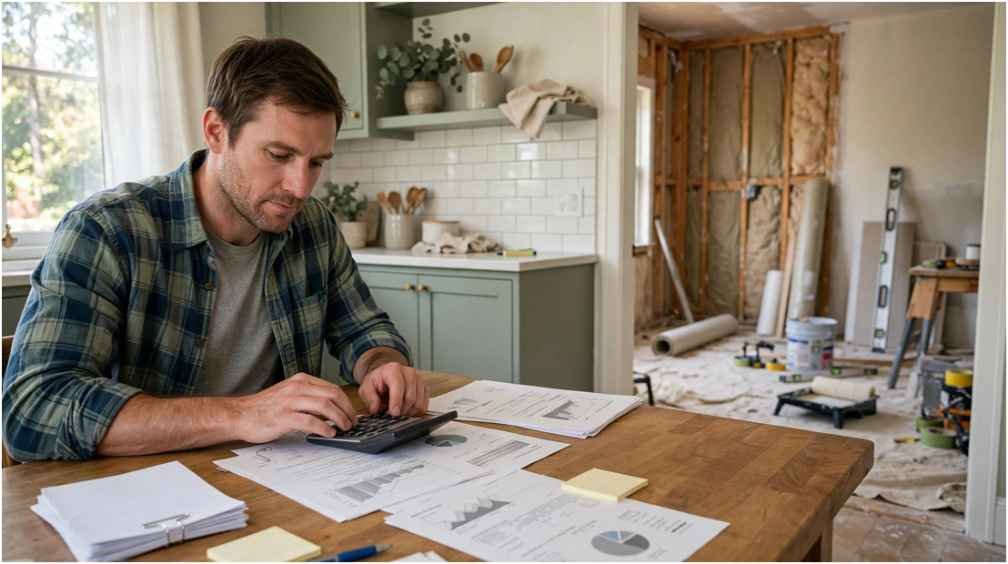





A few months ago, I started planning a few upgrades around my home. Nothing major. I wanted better insulation, newer windows, and maybe a smarter heating system that wouldn’t leave me dreading the next utility bill. Then I looked at the estimates. The costs climbed much faster than I expected, and for a moment, I wondered if putting everything off for another year would be the smarter choice.
While researching different renovation ideas, I kept running into something I had mostly ignored before: green home improvement government incentives. At first, I assumed they were limited to solar panels or expensive eco-friendly projects. The more I read, the more I realized they covered everyday improvements that many homeowners already plan to make. Understanding how these programs work completely changed the way I looked at budgeting for renovations.
Why Energy-Efficient Renovations Are Getting More Attention
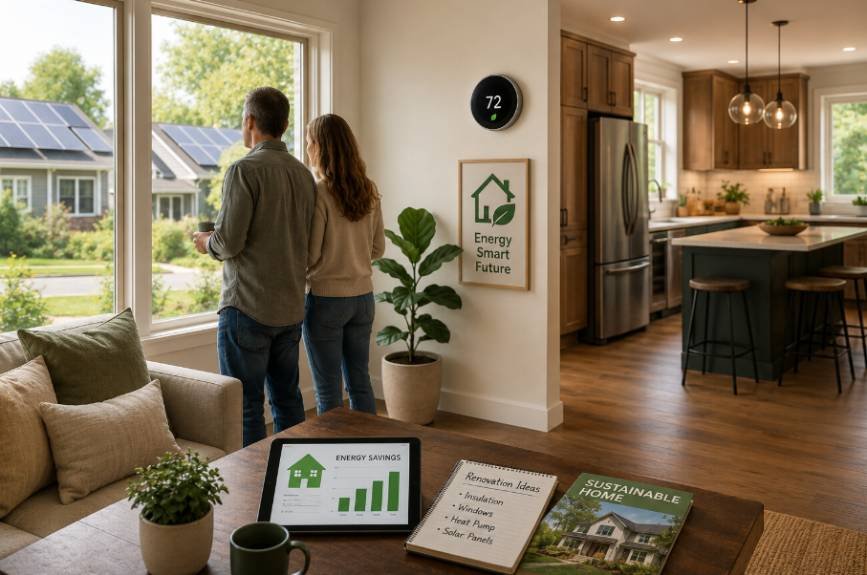
Home improvement isn’t just about making a house look better anymore. Rising energy costs have pushed many homeowners to think about how their homes perform throughout the year. A drafty window, outdated HVAC system, or poor insulation doesn’t just affect comfort. It quietly increases monthly utility bills for years.
That’s one reason energy-efficient renovations have become more common. Instead of spending money on upgrades that only improve appearance, people are investing in improvements that reduce energy consumption while increasing long-term value. Government incentive programs make that decision even easier by helping reduce the initial cost.
Understanding Green Home Improvement Government Incentives
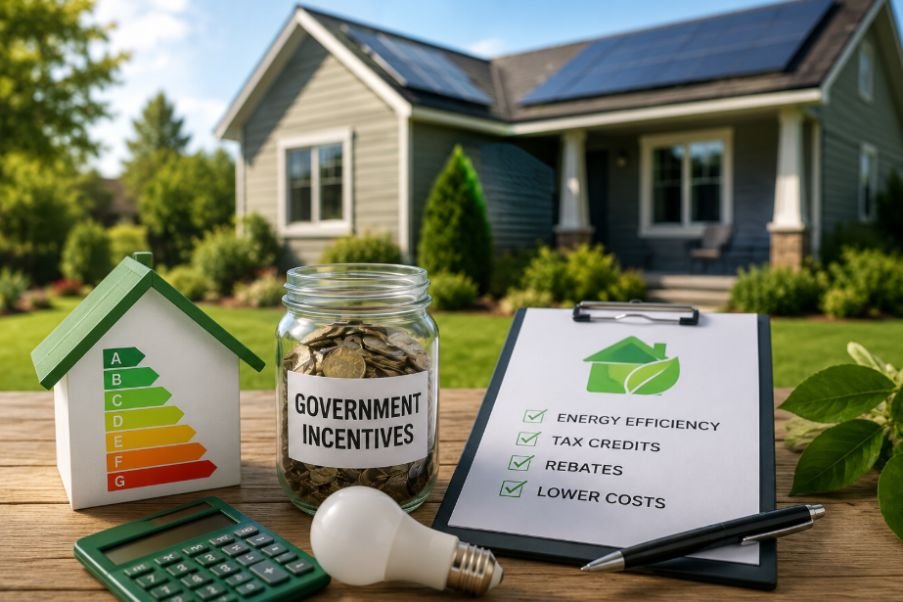
The term sounds complicated, but most incentive programs fall into three simple categories: tax credits, rebates, and financing options. Each works differently, and knowing the difference can help you maximize your savings.
Tax Credits Help Reduce What You Owe
Unlike a rebate, a tax credit lowers your federal income tax liability after you’ve completed an eligible project.
One of the most widely used programs is the Energy Efficient Home Improvement Credit. Eligible homeowners may receive a credit worth up to 30 percent of qualifying improvement costs, subject to annual limits. Projects involving insulation, exterior doors, energy-efficient windows, heat pumps, and certain high-efficiency HVAC systems often qualify when they meet required standards.
The Residential Clean Energy Credit focuses on larger renewable energy investments. Solar panels, geothermal heat pumps, battery storage systems, and other clean energy technologies may qualify for a 30 percent tax credit, making larger projects far more affordable than many homeowners expect.
Rebates Lower Costs Much Earlier
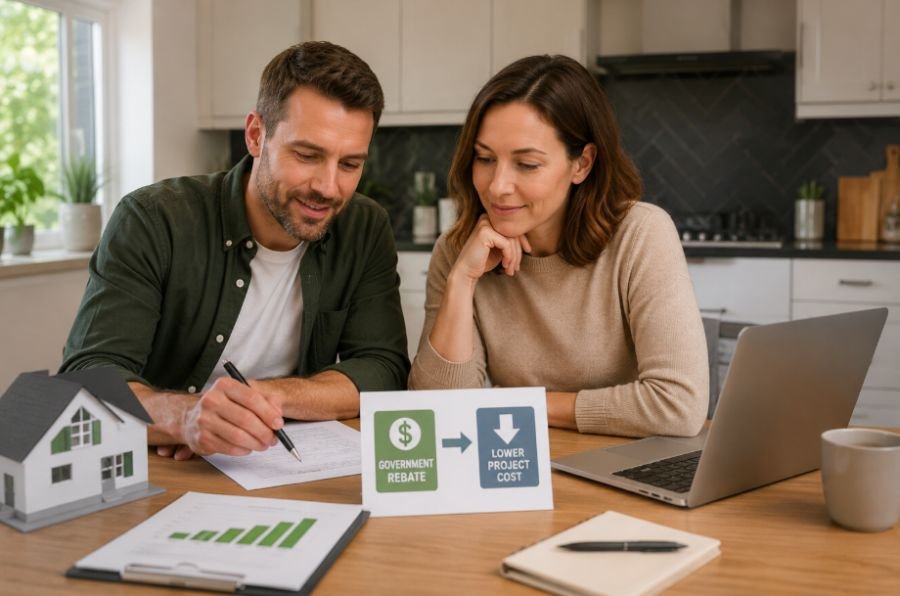
Rebates work differently because they reduce costs much closer to the time of purchase.
Many state-administered programs offer rebates for whole-home energy retrofits or electric appliances like heat pumps and induction cooktops. Utility companies also encourage energy-saving improvements through incentives for smart thermostats, LED lighting, efficient water heaters, insulation upgrades, and air sealing projects.
Since every utility provider offers different programs, checking local incentive databases before purchasing equipment can prevent homeowners from missing valuable savings.
Avoid Mistakes Before You Begin
Many homeowners accidentally reduce their potential savings simply because they purchase products before checking eligibility requirements.
A few simple steps can make a significant difference:
- Verify that products meet required efficiency certifications before purchasing.
- Keep receipts, invoices, manufacturer documentation, and installation records.
- Review local, state, and federal programs before finalizing renovation plans.
- Confirm whether qualified installation is required for specific incentives.
Taking time to organize these details beforehand often saves far more money than rushing into a renovation.
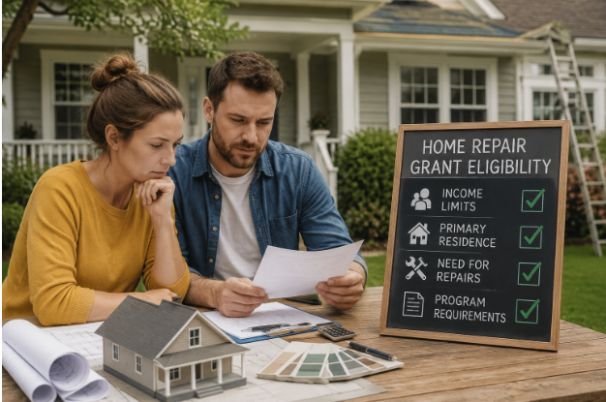
If you’re also exploring repair assistance for homes outside larger cities, our rural home repair eligibility guide explains additional programs that may complement energy-efficiency improvements.
Looking Beyond the Immediate Savings
The biggest benefit of green home improvement government incentives isn’t always the money you receive upfront. In many cases, the long-term value becomes much more noticeable after the renovation is complete.
Better insulation keeps indoor temperatures more consistent throughout the year. Energy-efficient windows reduce drafts while helping heating and cooling systems work less. Modern heat pumps consume less energy than older systems, and smart thermostats automatically adjust temperatures based on daily routines. Individually, these upgrades may seem modest. Together, they can noticeably reduce monthly utility bills while making a home more comfortable.
There’s also the added advantage of future-proofing a property. Energy performance is becoming a bigger consideration for buyers, and homes with efficient systems often stand out because they promise lower operating costs. While incentives shouldn’t be the only reason to renovate, they can make improvements that once felt out of reach much easier to justify.
Frequently Asked Questions
1. What are green home improvement government incentives?
They are financial programs that help homeowners reduce renovation costs through tax credits, rebates, grants, or specialized financing for eligible energy-efficient upgrades.
2. Do all home improvements qualify for incentives?
No. Only approved improvements that meet specific efficiency standards usually qualify. Eligibility depends on the program and the products installed.
3. Can I combine tax credits with local rebates?
In many cases, yes. Homeowners may qualify for both federal incentives and state or utility rebates, although each program has its own rules and limits.
4. Should I check incentives before starting a renovation?
Absolutely. Reviewing available programs first helps you choose qualifying products, prepare the required documentation, and maximize the financial benefits of your project.
A Smarter Renovation Starts Before the First Upgrade
Looking back, the biggest surprise wasn’t discovering that these programs existed. It was realizing how many homeowners begin renovations without checking whether financial assistance is available first. A little planning can change the entire budget. Instead of treating energy-efficient upgrades as expensive extras, incentives make them practical investments that continue paying off through lower utility costs, improved comfort, and better home performance for years to come.
The smartest renovation isn’t always the biggest one. It’s the one that’s planned with both today’s budget and tomorrow’s savings in mind.