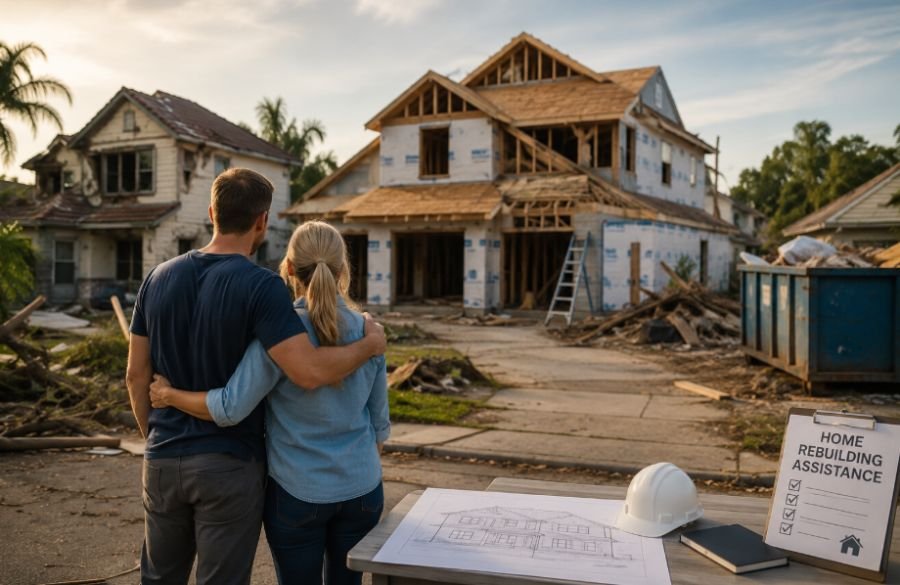




A leaking roof or failed furnace rarely waits for your credit score to recover. Bad credit home improvement loans can fund urgent repairs, but the wrong product may turn one problem into years of costly debt.
My rule is simple: match the financing to the repair’s urgency, useful life, and risk. I would never secure a cosmetic upgrade against a home before checking grants, public programs, and safer alternatives.
Can You Get a Home Improvement Loan With Bad Credit?
Yes. Approval depends on more than one score. Lenders may review income, debts, payment history, equity, collateral, and loan size. Stronger credit usually brings lower rates and more choices.
There is no universal “bad credit” cutoff. Compare bad credit home improvement loans by APR, fees, monthly payment, total repayment, and foreclosure risk.
The safest bad credit home improvement loans solve a defined repair without placing more property or income at risk than necessary.
Compare Bad Credit Home Improvement Loans
| Option | Best use | Main risk |
| Home equity loan or HELOC | Large or phased repairs | Your home secures the debt |
| FHA 203(k) | Refinance or purchase plus renovation | Extra paperwork and project controls |
| HUD Title I | Repairs without refinancing | Limited participating lenders |
| USDA Section 504 | Eligible rural, low-income owners | Strict location and income rules |
| Personal loan | Smaller urgent repairs | High APR with weak credit |
| Co-signed loan | Applicants with reliable support | Co-signer becomes liable |
| Grants or weatherization aid | Safety and energy upgrades | Restricted uses and funding |
1. Home Equity Loan or HELOC
A home equity loan provides a lump sum and usually has a fixed rate. A home equity line of credit, or HELOC, is reusable and commonly has a variable rate. Both use your home as collateral, so default can lead to foreclosure.
These bad credit home improvement loans may fit a roof, foundation, or plumbing project with a firm budget. A HELOC may suit phased construction because you draw money as bills arrive.
I would stress-test the payment against job loss, reduced income, and future rate increases. A loan is not affordable simply because the first payment fits your budget.
2. FHA 203(k) Renovation Mortgage
An FHA 203(k) mortgage combines a home purchase or refinance with eligible renovation costs. HUD offers Standard 203(k) financing for major work and Limited 203(k) financing for less expensive improvements. Repair funds are generally held in escrow and released during the project.
This option can simplify major financing, but it is not a quick cash loan. Expect property standards, contractor estimates, lender reviews, inspections, and project documentation.
It may make sense when you already plan to refinance. Replacing a favorable existing mortgage solely to access renovation money may cost more overall.
3. HUD Title I Property Improvement Loan
HUD’s Title I program insures loans made by private lenders. The improvements must protect or improve the property’s basic livability or utility.
HUD presents Title I as an option for homeowners who need repairs without purchasing or refinancing the property.
Ask lenders specifically about Title I property improvement financing. Not every FHA-approved lender actively offers the program, and local availability may be limited.
4. USDA Section 504 Home Repair Assistance
USDA Section 504 serves very-low-income homeowners in eligible rural areas who cannot obtain affordable credit elsewhere.
Loans can reach $40,000, carry a fixed 1% interest rate, and run for 20 years. Qualifying homeowners aged 62 or older may receive grants up to $10,000 for removing health and safety hazards.
For eligible households, this may beat commercial bad credit home improvement loans by thousands of dollars. However, processing time depends on funding and local demand. Apply before a manageable defect becomes an emergency.
5. Unsecured Personal Loan
A personal loan does not place a lien on your home. It can suit a smaller, fixed-price repair, such as replacing an HVAC component or fixing a bathroom leak.
The main drawback is cost. Lower credit scores often produce higher rates. Compare APR rather than interest alone because APR includes certain fees charged for obtaining the loan.
Avoid borrowing more than the contractor’s written estimate. Add a modest contingency for essential repairs, but do not finance unrelated furniture or décor.
6. Co-Signed Loan or Credit-Union Financing
A co-signer with stronger credit may improve your approval chances or borrowing terms. However, that person becomes responsible if you miss payments.
Late payments can harm both credit profiles. Co-signing also does not automatically give the co-signer ownership rights in the renovated property.
I would also ask local credit unions about smaller personal loans, secured savings loans, or manual underwriting. A lender that reviews your full financial history may reach a different decision than an automated online platform.
7. Grants and Weatherization Support
Not every repair requires debt. The Department of Energy’s Weatherization Assistance Program supports qualifying energy-efficiency and health-and-safety improvements through state and local agencies.
Search by the exact problem rather than using only broad financing terms. Useful searches may include accessibility modifications, lead-hazard removal, disaster recovery, critical home repair, weatherization, or utility assistance.
These programs may reduce how much you must borrow through bad credit home improvement loans. Even partial assistance can make the remaining monthly payment more manageable.
The Cost Check Most Borrowers Miss
A low monthly payment can hide a painful total cost.
Consider a $20,000 five-year loan. At 12% APR, the monthly payment is about $445, with roughly $6,693 in total interest. At 24% APR, the payment rises to about $575, with roughly $14,522 in interest.
The higher rate adds about $7,829 in interest. That money could fund another repair, replenish emergency savings, or cover several months of mortgage payments.
My practical test is to compare the repair’s expected life with the loan term. Financing a long-life roof over five years may make sense. Financing paint, décor, or trendy fixtures at 24% APR usually does not.
How to Improve Approval Odds
Review all three credit reports before applying and dispute incorrect balances, unfamiliar accounts, or inaccurate late payments. AnnualCreditReport.com provides access to reports from Equifax, Experian, and TransUnion.
Prepare recent income proof, bank statements, mortgage information, contractor estimates, and a realistic project budget. Separate essential repairs from upgrades that can wait.
When available, use prequalification to compare bad credit home improvement loans before submitting full applications. Then examine:
- APR and interest-rate type
- Origination and closing fees
- Prepayment penalties
- Collateral requirements
- Monthly payment and total repayment
- Contractor-payment or draw rules
Compare at least three written offers. A lower monthly payment may result from a longer term rather than a better deal.
Red Flags to Avoid
Walk away from lenders that guarantee approval, hide the APR, pressure you to sign immediately, or ask you to falsify income.
Avoid payday financing for home repairs. The Consumer Financial Protection Bureau states that a typical two-week payday loan charging $15 for every $100 borrowed equals an APR of almost 400%.
Legitimate bad credit home improvement loans should clearly disclose their costs, repayment schedule, security interest, and late-payment consequences.
Be cautious when a contractor arranges financing but refuses to provide an itemized estimate. Never borrow against your home for work you cannot verify, permit, insure, or afford.
FAQs About Bad Credit Home Improvement Loans
1. What credit score is needed for a home improvement loan?
No single minimum applies because lenders also consider income, debts, payment history, collateral, equity, and the selected loan program.
2. Can I get bad credit home improvement loans without home equity?
Yes. Personal loans, co-signed financing, grants, weatherization support, and some HUD Title I arrangements may not require available home equity.
3. Are government home repair loans easier to qualify for?
They may offer affordable structures, but each program has strict income, location, occupancy, property, and project requirements.
4. Is a HELOC better than a personal loan for bad credit?
A HELOC may have lower costs, but it risks your home and often carries a variable rate, so compare total cost and repayment risk.
Fix the House, Not Your Finances
Bad credit home improvement loans are tools, not rescue plans. I would first price the essential repair, check public assistance programs, and compare three written offers.
Choose the smallest affordable loan that completes the urgent work safely. If the payment only works under perfect conditions, the loan is too expensive.