





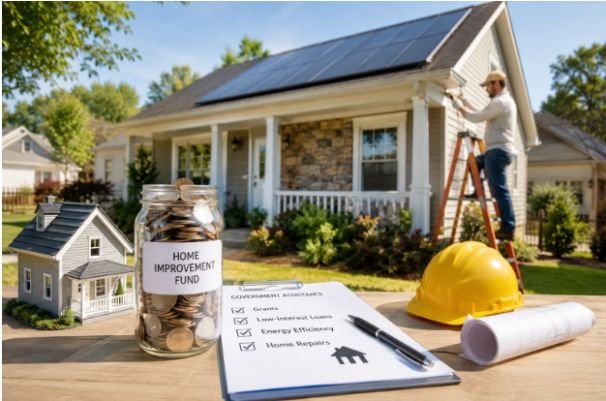
When I first started looking into the cost of home repairs, I assumed every project had to come straight from my savings. Replacing an aging roof, updating old wiring, or making a home more energy efficient all sounded expensive, and I figured government assistance was either impossible to qualify for or simply didn’t exist.
After spending time researching the options, I realized that wasn’t entirely true. The challenge wasn’t finding programs. It was understanding which ones actually applied to different situations.
I also noticed how much confusing information was floating around online. Some websites promised “free government money” for home renovations, while others buried useful details behind complicated terms and eligibility rules.
Once I dug a little deeper, it became clear that government-funded home improvement options are real, but they work differently than many homeowners expect. Knowing how these programs are structured can make it much easier to decide where to start.
What Government-Funded Home Improvement Options Really Mean

One of the biggest misconceptions is that every government program offers free money for renovations. In reality, assistance usually falls into four categories: grants, low-interest loans, mortgage financing, and rebates.
Grants typically don’t have to be repaid if all program requirements are met. They’re often reserved for homeowners with limited income, seniors, veterans, or people living in eligible rural communities.
Loans are different. They provide funding at favorable terms, often with lower interest rates than traditional financing. Rebates reduce the cost of specific upgrades, especially those related to energy efficiency, while some tax incentives help offset eligible improvement expenses when filing taxes.
Understanding these differences helps narrow your search instead of applying for programs that don’t match your situation.
Federal Programs That Help Eligible Homeowners
Several federal programs are designed to improve housing safety, accessibility, and energy performance rather than fund cosmetic remodeling.
The USDA Section 504 Home Repair Program is one of the best-known options for rural homeowners. It offers repair loans with a fixed 1 percent interest rate for qualified applicants, while homeowners aged 62 or older who meet income requirements may qualify for grants to remove health and safety hazards.
Another well-known option is the FHA Title I Property Improvement Loan. These loans are issued through approved private lenders and insured by the Federal Housing Administration, making it possible for homeowners with limited equity to finance eligible repairs and improvements.
For larger renovation projects, the FHA 203(k) program allows qualifying borrowers to include renovation costs within their mortgage. Instead of securing separate financing, home purchase and repair expenses can often be combined into a single loan.
Veterans with qualifying service-connected disabilities may also be eligible for Specially Adapted Housing grants that help fund modifications needed to improve accessibility and independent living.
Don’t Overlook Local and State Assistance
Federal programs receive most of the attention, but many homeowners actually find better opportunities much closer to home.
Cities and counties often receive Community Development Block Grant funding that supports emergency repairs, rehabilitation projects, and housing improvements for eligible residents. These programs vary by location because local governments decide how funding is distributed based on community needs.
Many states also operate their own rehabilitation programs for owner-occupied homes. Some focus on repairing aging housing stock, while others prioritize accessibility improvements or disaster recovery assistance.
Utility companies deserve attention as well. Many offer rebates for insulation, efficient heating and cooling systems, water heaters, windows, and other upgrades that reduce energy consumption. These incentives can significantly lower renovation costs without requiring homeowners to take on additional debt.
Who Is Most Likely to Qualify?
Eligibility depends on the specific program, but several factors appear repeatedly.
Income is often the first consideration, particularly for grants aimed at helping low- and moderate-income households. Age can also matter, especially for programs supporting senior homeowners. Green home improvement government incentives can also play a significant role in reducing renovation costs, especially for projects that improve energy efficiency or environmental sustainability.
Depending on the program, homeowners may qualify for grants, rebates, tax credits, or low-interest financing when installing features such as solar panels, insulation, energy-efficient windows, heat pumps, or water-saving systems, making eco-friendly upgrades more affordable while lowering long-term utility expenses.
Location plays a surprisingly important role. Rural housing programs, state-funded initiatives, and county rehabilitation grants all have geographic requirements that determine eligibility.
The type of repair is equally important. Programs generally prioritize projects that improve health, safety, accessibility, structural integrity, or energy efficiency. Cosmetic renovations, such as luxury kitchen upgrades or decorative landscaping, rarely qualify for government assistance.
Applying Successfully Takes Preparation

Many applications are delayed because homeowners wait until repairs become urgent before gathering paperwork.
Having documents ready beforehand can make the process much smoother. Depending on the program, applicants may need:
- Proof of income
- Property ownership records
- Estimates from licensed contractors
- Recent tax documents
- Identification and residency information
Some energy-efficiency programs may also require a home energy audit before incentives are approved.
Reading the eligibility requirements carefully before applying saves time and reduces unnecessary paperwork.
Be Careful of Home Improvement Grant Scams
Searching online for financial assistance often leads to advertisements promising guaranteed approval or completely free renovations. Those claims should always be treated with caution.
Legitimate government-funded home improvement options usually involve clear eligibility requirements, formal applications, and official government or agency websites. No legitimate program guarantees approval before reviewing an application or requests payment simply to access available funding.
When researching assistance, start with official federal, state, county, or local housing agencies instead of relying on social media advertisements or unsolicited phone calls.
FAQs: Government-Funded Home Improvement Options Every Homeowner Should Know About
Are government-funded home improvement options completely free?
Not always. Some programs provide grants that don’t require repayment, while others offer affordable loans, rebates, or mortgage financing depending on eligibility and the type of project.
Can I get help for cosmetic renovations?
Most programs focus on repairs that improve safety, accessibility, structural integrity, or energy efficiency rather than luxury upgrades or decorative remodeling.
Do I have to meet income requirements?
Many grant programs do have income limits, but some loans, rebates, and energy-efficiency incentives are available to a wider range of homeowners.
Where should I begin my search?
Start with official federal agencies, your state housing office, local government, or utility provider to learn which programs are available where you live.
A Little Research Can Open More Doors Than You Expect
Looking into government assistance won’t guarantee funding, but it can uncover opportunities that many homeowners never realize exist. Whether the goal is repairing a roof, improving accessibility, lowering energy bills, or making an older home safer, taking the time to understand available programs is often the smartest first step before reaching for traditional financing.
The right program won’t pay for every renovation, but it might make an important one far more affordable.